Before Installing an Electric Water Heater, Check These Electrical Requirements
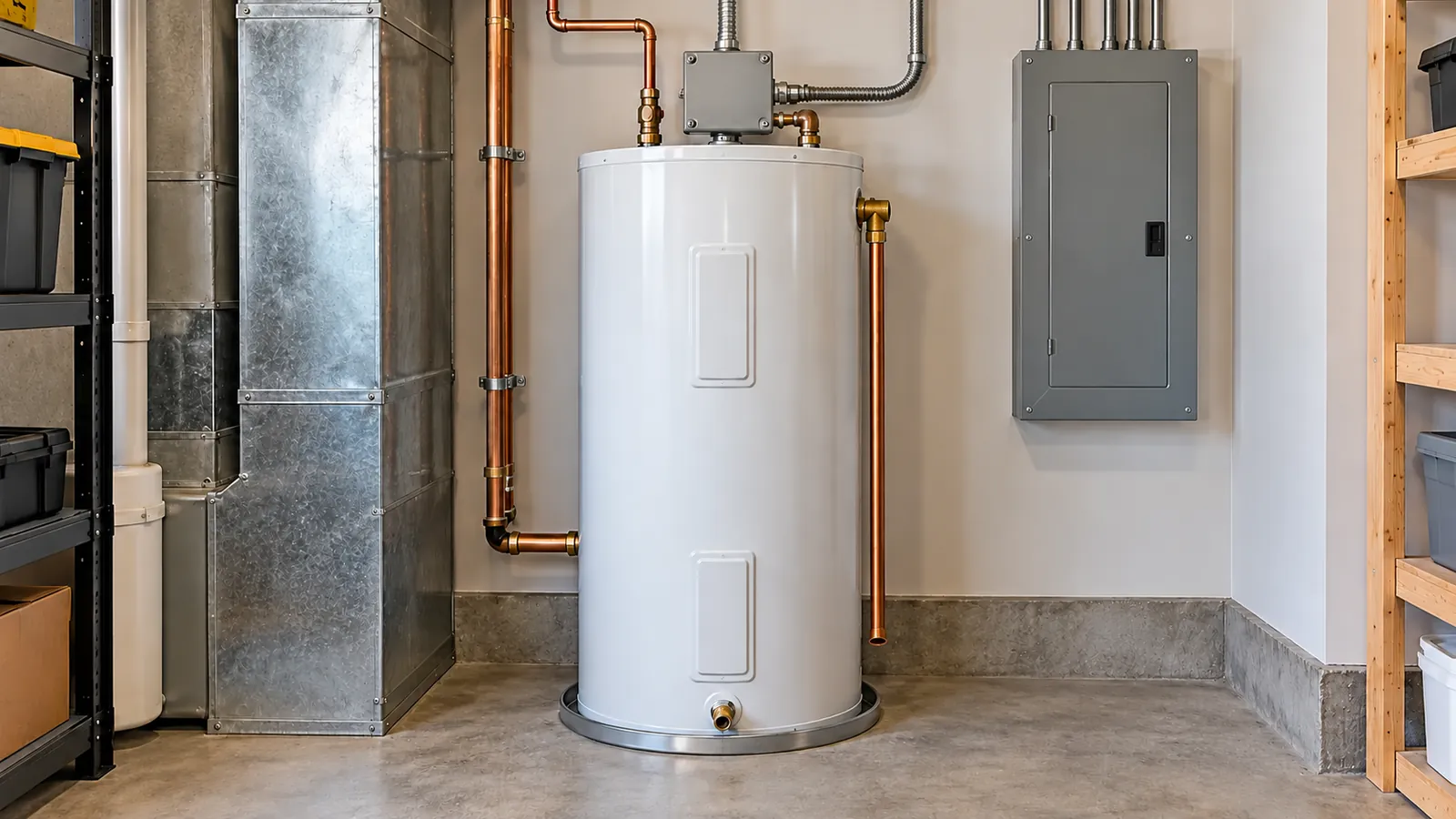
Before you buy an electric water heater, have the exact model’s electrical requirements checked against your home’s existing circuit and available electrical capacity. Tank size alone does not tell you whether the wiring, breaker or panel is suitable. Replacing a heater with a different technology can change the electrical work as well as the plumbing work.
For Atlanta-area homeowners, the useful first step is to share the proposed model number with the installer and electrician before scheduling delivery. That allows the electrical scope to be established while you can still compare appliances.
Start with the model, not a universal breaker size
Find the installation manual and electrical rating information for the exact water heater you want. Ask the electrician to confirm the supply voltage, rated electrical input, required circuit arrangement and connection method. A wiring recommendation for a different model is not a substitute for these instructions.
Do not assume that two heaters with the same gallon capacity have identical electrical requirements. The existing circuit also needs to be assessed before it is reused. Keep appliance covers and the electrical panel cover in place; photographs of accessible labels can help with planning without exposing wiring.
Storage, tankless and heat pump models need different planning
| Water heater type | Question to resolve before purchase |
|---|---|
| Electric storage tank | Does the existing circuit match this model’s installation requirements? |
| Electric tankless | Can the electrical supply support its demand and specified circuit arrangement? |
| Heat pump water heater | Do both the electrical connection and installation space meet the model’s requirements? |
Electric tankless equipment deserves an early electrical review. A.O. Smith’s installation guide describes models with substantial current demand and different circuit arrangements. Its guidance emphasizes checking panel capacity and using the model’s installation instructions. A smaller appliance cabinet does not mean a smaller electrical project.
Heat pump water heaters add another consideration: the installation environment. Department of Energy guidance explains that these appliances draw heat from surrounding air and have specific space and temperature requirements. An electrical check alone does not establish that a small closet is a suitable location.
Ask whether the panel can support the proposed heater
Make the capacity review part of the quote rather than an assumption made after the appliance arrives. Ask the electrician to explain whether the proposed installation can use the existing supply, requires circuit changes, or warrants further panel assessment.
If panel work is identified, request a clear scope separating that work from the appliance and plumbing installation. Mason Electric’s electrical panel replacement and upgrade service is a relevant starting point for discussing a panel assessment in the Atlanta area.
Coordinate the electrical and plumbing work
Before installation day, confirm who handles the electrical connection, plumbing connections, applicable permits, inspections and final start-up. Ask which tasks are included in each quote and whether any findings could change the schedule.
For an electric storage tank, the manufacturer’s start-up sequence matters. A.O. Smith warns against energizing an empty tank because this can damage the heating elements. The installer should complete filling and follow the specific start-up instructions before power is applied.
Bring these details to the planning conversation
- The proposed heater’s model number and installation manual.
- The existing heater’s accessible rating label and model number.
- Whether you are changing from gas, electric storage, tankless or heat pump equipment.
- The installation location and any planned relocation.
- A request for a written electrical scope before purchasing the appliance.
The practical takeaway: choose the water heater and plan its electrical installation together. Confirming the model requirements, existing circuit and available capacity first gives you a clearer project scope before delivery.