Commercial EV Charger Installation: What Small Businesses Should Plan Before Buying
Start with the parking use case—not the charger box
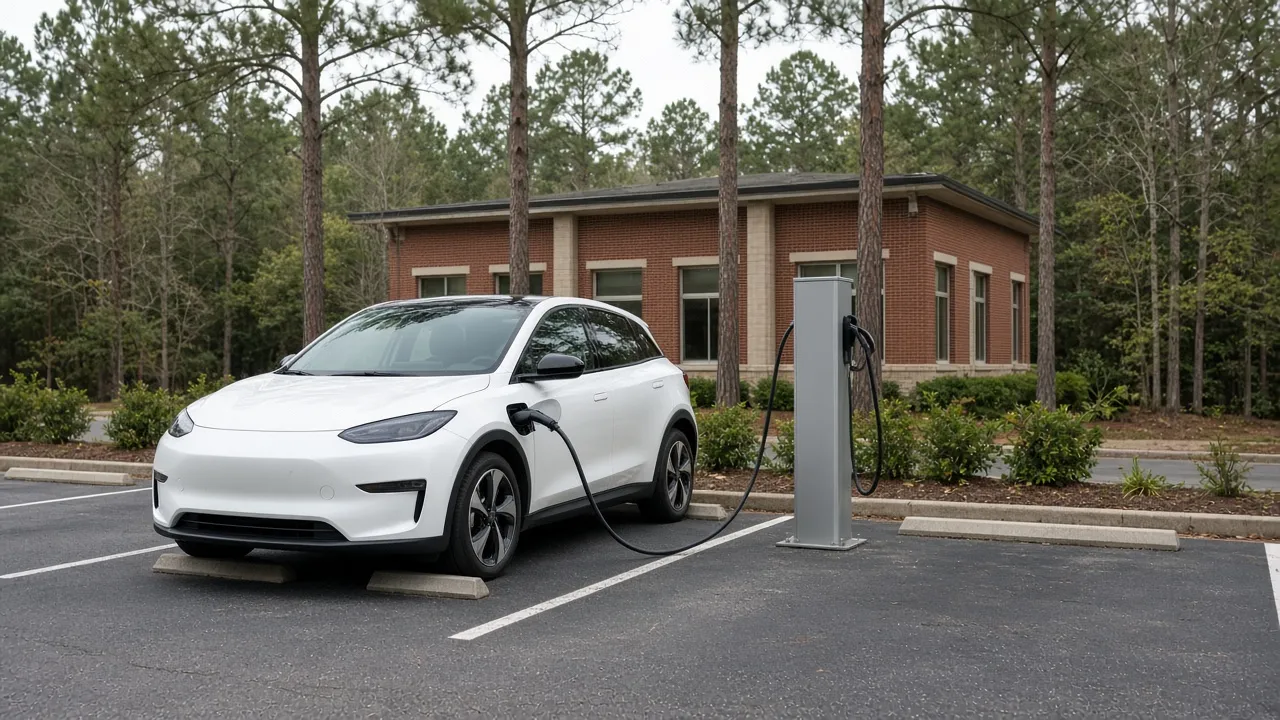
Before buying a commercial EV charger, decide who will use it, how long their vehicles will stay, and how much energy they need before leaving. Then have the electrical capacity, parking layout, property permissions, and operating responsibilities reviewed. A charger that looks affordable online can still be the wrong purchase for the site.
For a small office, shop, or service business in metro Atlanta, the useful starting point is a short project brief—not a promise to install the fastest unit available. This guide helps you prepare that brief and compare commercial EV charger installation proposals. It is not an electrical design or an installation quote.
Write one sentence that defines success
Try: “We want two employees to replace their normal commute energy during a full workday.” That is a different project from “We want customers to add useful range during a short visit.” Avoid combining those goals until you know how the parking spaces will actually be used.
| Use case | Question to answer first | A useful project measure |
|---|---|---|
| Employees parked for several hours | How much energy do participating drivers need on a typical day? | Energy delivered before the end of each shift |
| Customers making short visits | Is charging a practical benefit within the normal visit length? | Usable charging sessions without blocking other customers |
| A small business fleet | Which vehicle must be ready first, and when? | Vehicles ready for their next departure |
These are planning prompts, not charger recommendations. Record today’s demand separately from hoped-for future demand. “Space for expansion” is a clearer instruction than buying extra output without an agreed reason.
Ask for energy and time—not just an amperage
Illustrative calculation: suppose a vehicle needs 20 kWh and can remain connected for eight hours. Dividing 20 by eight gives an average of 2.5 kW delivered to its battery. The electrical input must also cover charging losses. This arithmetic does not select a circuit, establish available service capacity, or guarantee that a vehicle will charge at a constant rate.
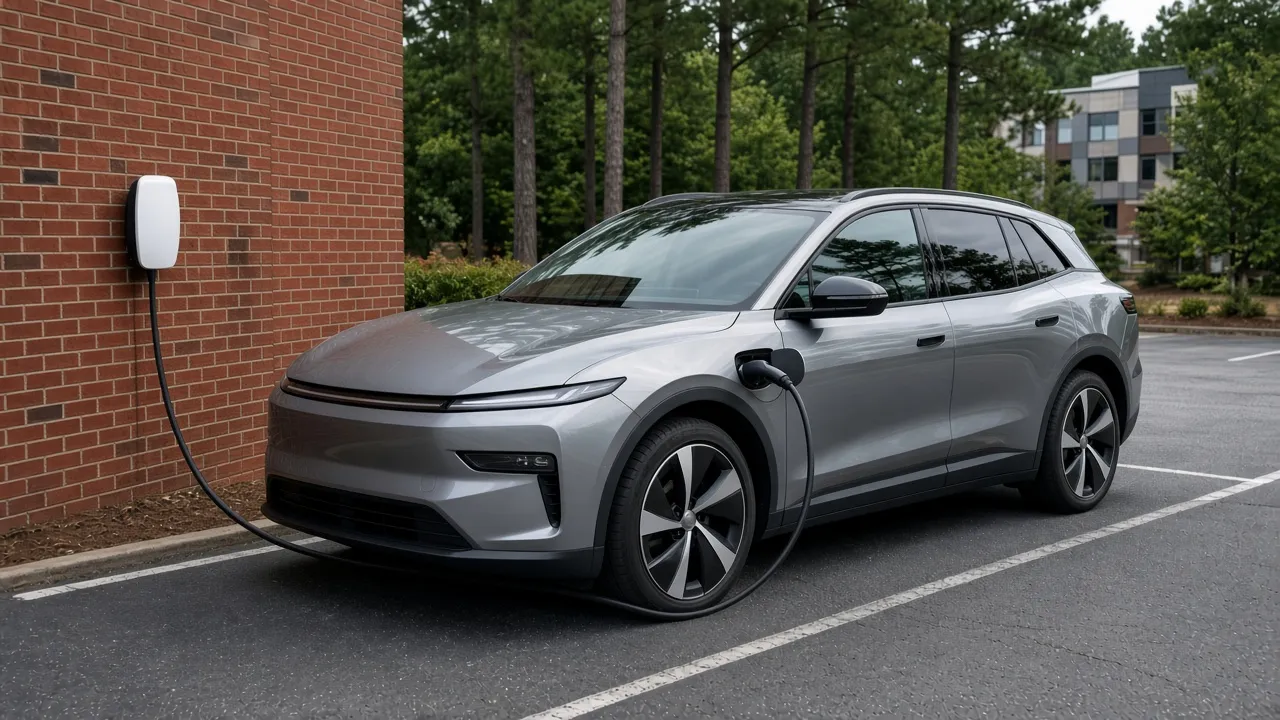
Use the example to ask a better question: “What charging arrangement can meet our departure deadline?” Do not use it to buy a breaker or size conductors. Have the installer or electrical designer explain the proposed output at the site’s actual supply voltage, the vehicle’s limits, and any power-sharing behavior.
For example, if a proposal mentions two 7.2 kW charging positions, ask whether that means 7.2 kW at each position simultaneously or a 7.2 kW total shared between them. The labels describe very different service experiences. Get the answer in writing, including what happens when both spaces are occupied.
Have the property and electrical system assessed before ordering
The U.S. Department of Energy’s charging infrastructure planning guidance recommends early coordination with the utility and an electrical contractor, alongside consideration of siting, permits, operating costs, and future expansion.
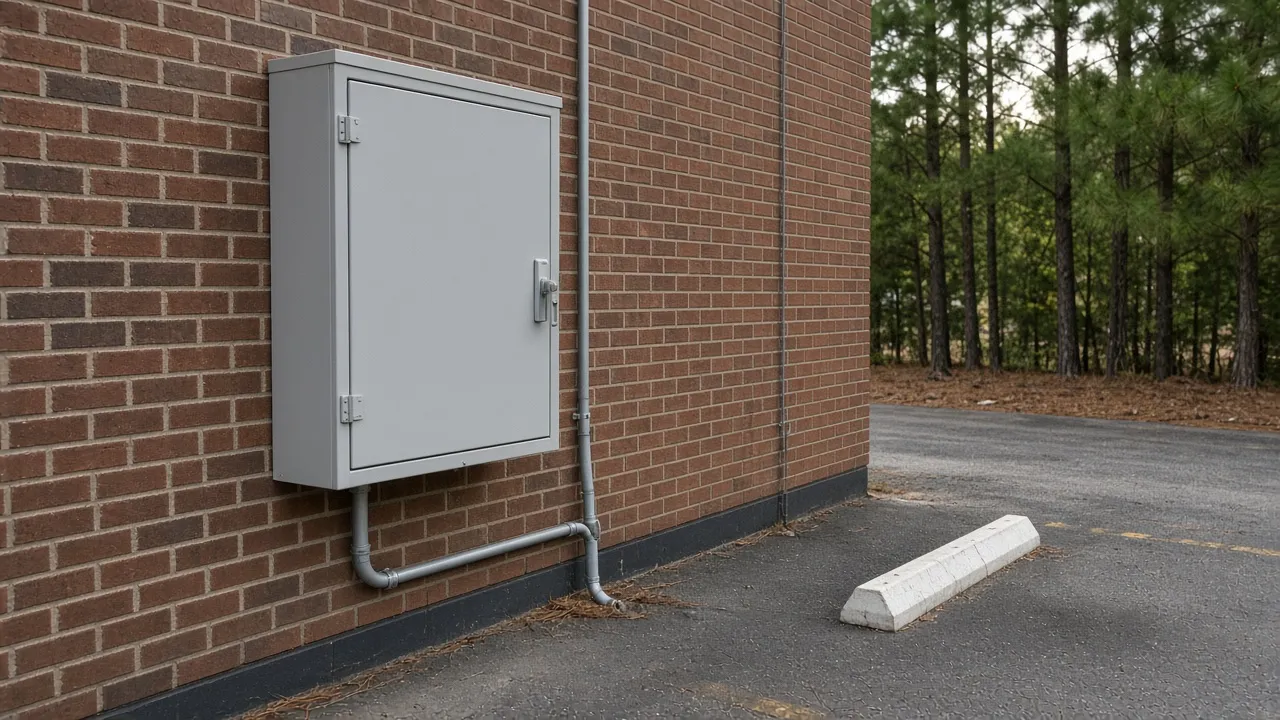
For the site visit, prepare a parking sketch, the proposed equipment model, available utility records, and any building information you already have. Take photographs only from safe, accessible positions; do not remove electrical covers to obtain them.
Ask for a written distinction between what is confirmed and what remains an allowance. “Existing capacity confirmed” should not be interchangeable with “capacity to be checked later.” Likewise, a short distance on a map does not establish an approved cable route.
If you lease the space, settle the permission question before ordering. Write down who owns the installed equipment, who authorizes work in shared parking, and what happens when the lease ends. In Atlanta and the surrounding municipalities, confirm the authority responsible for your actual address rather than assuming every metro-area property follows one permit process. Ask that authority and your project team to identify applicable electrical, parking, accessibility, and inspection requirements.
Make the quote describe a working service
Request a proposal that answers these questions explicitly:
- Acceptance: What must work at handover, and how will you verify it? Include access credentials and a demonstration of the functions you are purchasing.
- Exceptions: Which conditions could change the price or completion date, and who must authorize a change?
- Support: Who takes the first call when a driver cannot start a session—the installer, equipment supplier, or network operator?
- Handover: Will you receive model and serial numbers, settings, warranty information, and the relevant permit or inspection records?
- Exit: If a software subscription ends, which functions remain available, and can the account or equipment transfer to another operator?
Also decide who at your business owns the day-to-day task. Write a simple rule for reporting damage, managing access, and taking an unusable position out of service. A named contact and a clear escalation route are more useful than assuming the charger will need no attention.
Questions about your site? Talk to Mason.
Check Georgia incentives before putting them in the budget
For eligible Georgia Power business customers, the Business EV Charger Plus program has equipment, account, documentation, and operating conditions. Its linked 2026 terms, version February 9, 2026, cap the business rebate at the lesser of 50% of eligible costs or $30,000 per premises/service account, with a $60,000 annual cap per applicant. Eligibility and payment are not guaranteed.
Read the conditions before you sign a lease or place an order. The charger must be new, Level 2 (208/240 V) or higher, NRTL-certified, on a dedicated circuit, and installed by a licensed electrician; mobile or portable chargers are excluded. The rebate is paid to the Georgia Power account holder only, and the terms require the applicant to own, maintain, and keep the equipment in place for five years after installation unless Georgia Power consents to removal. If you rent, the lease, the account holder, and any written authorization from the property owner need to line up first.
There is an important timing ambiguity. As of November 2026, the program webpage says pre-approval is recommended but not required, allows an application within six months after installation, and says chargers must be installed within the current calendar year. The linked terms say an application must be approved before installation, yet also allow applying up to six months after it. Obtain written clarification from Georgia Power before buying or starting work. Use the official program page and its terms, not a third-party rebate headline. These conditions apply to that utility’s program, not every business in Georgia; if another utility serves your building, ask it what programs it offers.
Do not confuse a utility rebate with a tax credit. As of November 2026, the Georgia Department of Revenue’s charger-credit page marks that state credit repealed effective January 1, 2026. The federal Section 30C charger credit has ended as well: under the IRS Form 8911 instructions, it cannot be claimed for property placed in service after June 30, 2026. Some planning pages still mention it, so do not build a new-project budget around either old credit. Ask a tax adviser about your circumstances; this guide makes no tax-eligibility determination.
Use a clear go/no-go point
Proceed to equipment ordering when you can explain the intended charging outcome, identify who controls the parking and equipment, and distinguish confirmed project costs from unresolved items. If capacity, permissions, or incentive timing is still uncertain, make that the next decision to resolve.
The practical takeaway: buy a charging outcome your business can operate and support—not an impressive specification that has not been matched to the property.
Planning commercial EV charger installation in North Metro Atlanta?
Mason Electric is a licensed and insured electrician serving homes and small businesses across North Metro Atlanta. If you are weighing a charger for your business, call (678) 599-8706 and have these ready: a parking sketch, panel photos taken without removing covers, and the charger model if you have chosen one. Mason installs chargers for small businesses such as shops and offices, and confirms the scope after reviewing your site. If your business is in Alpharetta, see our electrician in Alpharetta page. For how Mason approaches charger installs, see the EV charger installation page.