Outdoor Lighting Installation
Light where you need it. Comfort beyond the front door.
A dark front path, an unreliable porch light, or a floodlight aimed into a window calls for a specific fix. Mason Electric plans outdoor lighting around the areas you use, the equipment’s exposure, and the controls that decide when the lights run.
- Outdoor area photos
- Existing power points
- Planned light locations
- Preferred controls

The reason for the light shapes the installation.
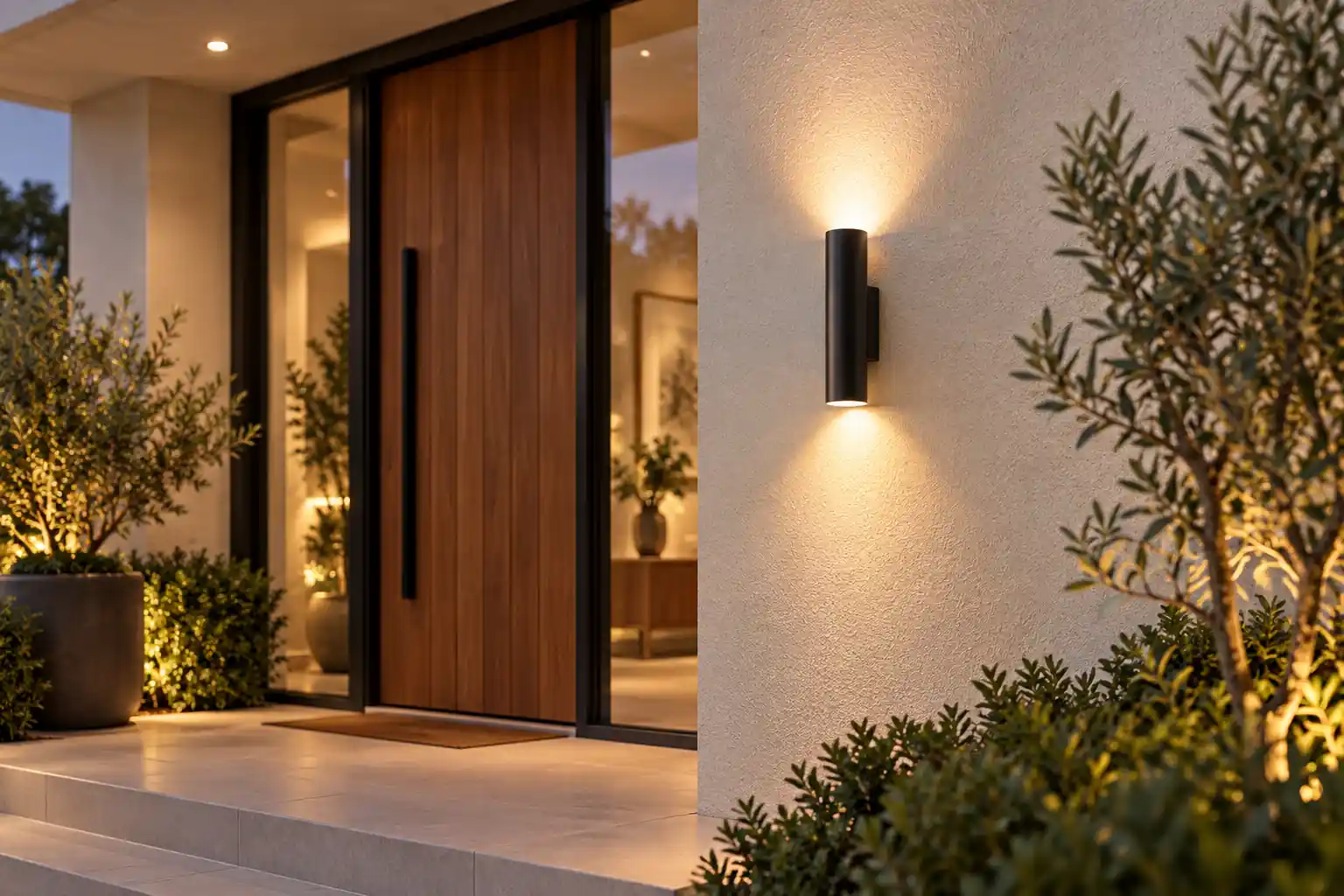
Entries and porches
Light the door, lock, and arrival area with fixtures suited to their location and a control you can use comfortably.
Paths and outdoor living
Define walking routes and usable patio areas. Source position should put useful light on surfaces rather than in your eyes.
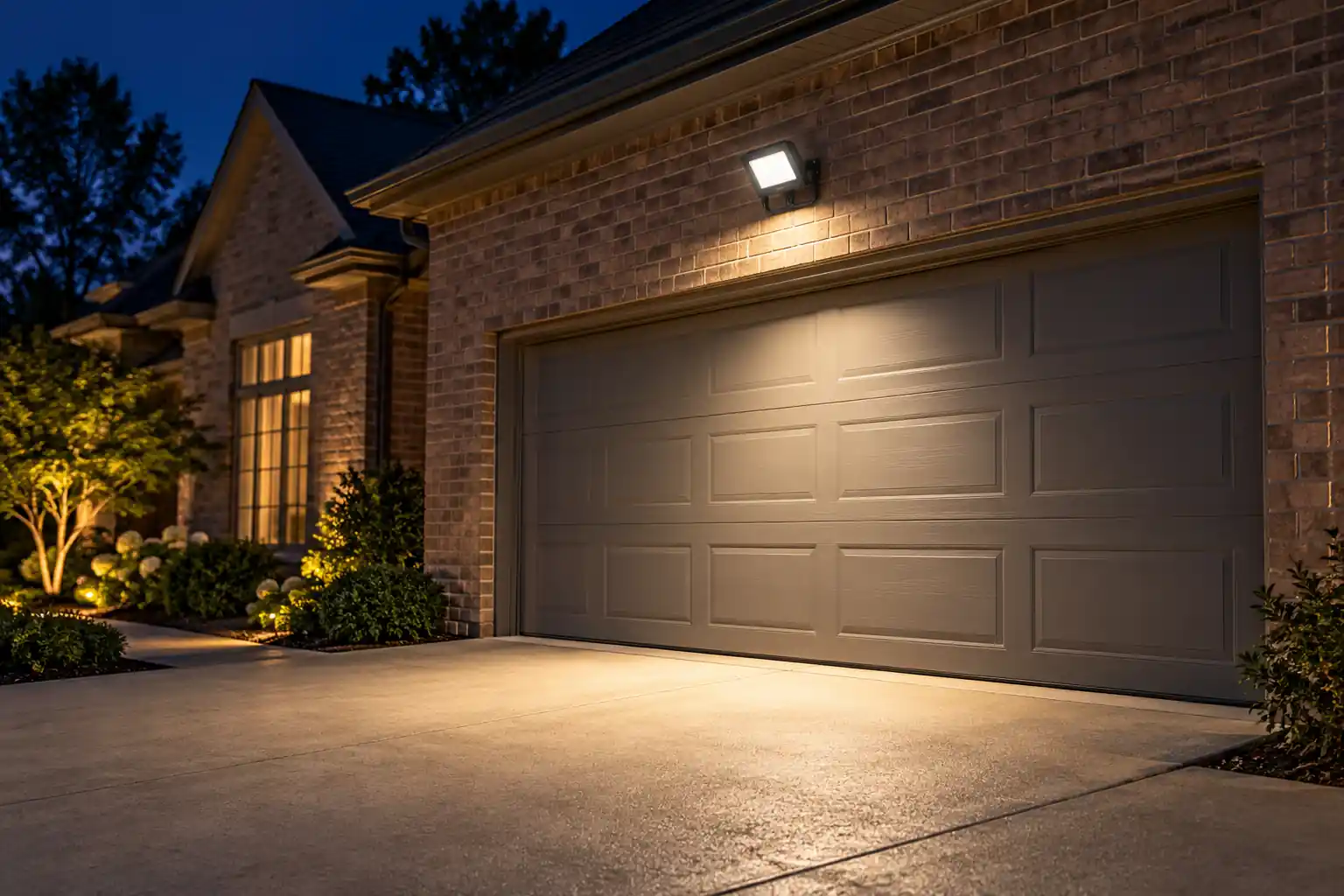
Driveways and side yards
Discuss coverage and triggering before choosing a powerful floodlight. Aiming, sensor behavior, and nearby windows matter.
A good outdoor light does not need to announce itself to the neighborhood.
A bright lamp may still leave a step poorly lit when its beam points elsewhere. We discuss placement, shielding, and aiming around the route you walk. Nearby windows and property edges deserve attention too.
DarkSky’s responsible lighting principles emphasize useful, targeted, restrained, controlled light. They are practical planning guidance; the authority serving the property and any applicable property rules still determine requirements.
Share photos from the driveway and affected windows, including where glare currently appears. The result might be a clear arrival route, a comfortable patio, or coverage of one particular side yard rather than maximum brightness across the property.
Decide when the lights should work.
| Control | Behavior | What to discuss |
|---|---|---|
| Wall switch | Direct manual control | Existing route and convenient control location |
| Motion sensor | Responds to detected activity | Approach direction, sensitivity and duration |
| Photocell | Responds to daylight level | Location and intended overnight behavior |
| Timer or smart control | Follows a planned schedule | Compatibility and manual override |
Exposure matters from the fixture to the connection.
Covered and rain-exposed locations have different conditions. We assess the equipment’s designation, mounting, cable entries, and complete connection arrangement. Outdoor style in a product photo is not an equipment rating.
Exterior connections and receptacles need appropriate protection for the installation. If the project also needs power on a deck or porch, ask about outdoor outlet and switch installation as a separate part of the scope.
Moisture symptoms, corrosion, or repeated protective-device trips deserve evaluation. Changing the visible light without assessing the connection can leave the underlying issue unresolved. Share the symptoms without opening equipment to investigate.
Landscape systems and wall-mounted lights are different projects.
A low-voltage landscape system brings the transformer, route, cable, fixtures, and controls into the plan. Existing equipment may not suit an expanded load or a different system. Available connections do not establish capacity.
A house-mounted line-voltage light involves its supply, box, fixture, and control. New positions or long routes may affect wall access and exterior finishes. Where ground work is involved, utility locating and route planning must be addressed before digging.
Identify who owns existing equipment. Utility-owned or leased lighting may need its owner’s service route rather than a private replacement. Georgia Power’s home electrical and energy FAQs provide utility guidance; a home installation estimate still needs the specific equipment and scope.
Check the effect from the path, patio, and windows.
After positioning and control setup, the useful question is how the light feels in use. We discuss aiming and operating settings. A nighttime effect cannot always be fully judged at a daytime appointment, so the scope should address final adjustment.
Tell us if a light stays on all day, triggers repeatedly, or never activates when you arrive. These can be control or position issues rather than a need for a brighter fixture.
Replacement at an existing point differs from new wall wiring or a landscape extension. Power availability, cable distance, access, controls, weatherproof connections, and ground or finishing work affect the estimate. Share any HOA or property-manager rules during planning.
Plan your outdoor lighting installation in Atlanta Metro.
Mason Electric serves Atlanta, Alpharetta, Milton, Roswell, Duluth, Cumming, and Johns Creek. Include your service address and ZIP code so we can confirm the location and scheduling for your project. Serving Alpharetta? See our Electrician in Alpharetta page.
Questions before you schedule outdoor lighting installation.
Practical answers to help define the work.
Can you replace a porch light?
We assess the point, mounting, connection condition, exposure, and selected replacement. Share a photo and model; damaged mounting or connections may need additional work.
Can outdoor lights be added with no existing power?
We can assess a suitable supply and route. Distance, access, ground work, circuit conditions, and equipment determine the scope.
Can a motion sensor stop triggering all night?
We assess the position, settings, coverage, and surroundings. Some problems need a different control arrangement or location, not a brighter light.
Can new landscape lights use my transformer?
Its rating, existing and proposed load, fixtures, cable route, and instructions need review. A spare terminal does not establish capacity or compatibility.
Will lighting guarantee better security?
Lighting can make an approach or area easier to see, but it does not guarantee crime prevention. We plan useful coverage and controls without promising a security outcome.
Can the light stay out of my neighbor’s window?
We can discuss shielding, position, beam direction, and output. Nearby windows and property boundaries should be part of the design.
Does outdoor lighting need a permit?
Confirm the scope with the authority serving the address. New supply, wiring, or controls can change requirements; the service name alone cannot establish an exemption.
Electrical requirements and planning resources
Georgia’s electrical framework uses the 2023 NEC with Georgia amendments. Check DCA’s current state codes and confirm the permit and inspection scope for the actual address. Atlanta’s technical permit service is the city’s official application and contact route. Outside Atlanta city limits, use the authority serving the property.
Discuss required approvals alongside wiring changes, equipment selection, and access before work begins. Product instructions and local requirements guide the installation; a general planning page cannot decide an exemption for every project.
Where does your home need light after dark?
Send an approach, patio, or side-yard photo. Let’s define coverage and control before selecting fixtures.
- Photos of the path, entry, or patio
- Existing power points and planned fixture locations
- Timer, motion, or manual control preference