Ceiling Fan Installation
Make that room feel better with a fan that fits.
You have found a ceiling fan you like. The next questions are practical: can the existing light location support it, will the downrod clear the room, and will the wall switch work with the new controls? Settle those details before the box is opened.
Replacing a fan, converting a light, or adding a new location? Each starts with a different scope.
Our Work in North Atlanta
Ceiling fans we installed across North Atlanta, including vaulted ceilings, long downrods and covered porches. Real jobs, real photos.
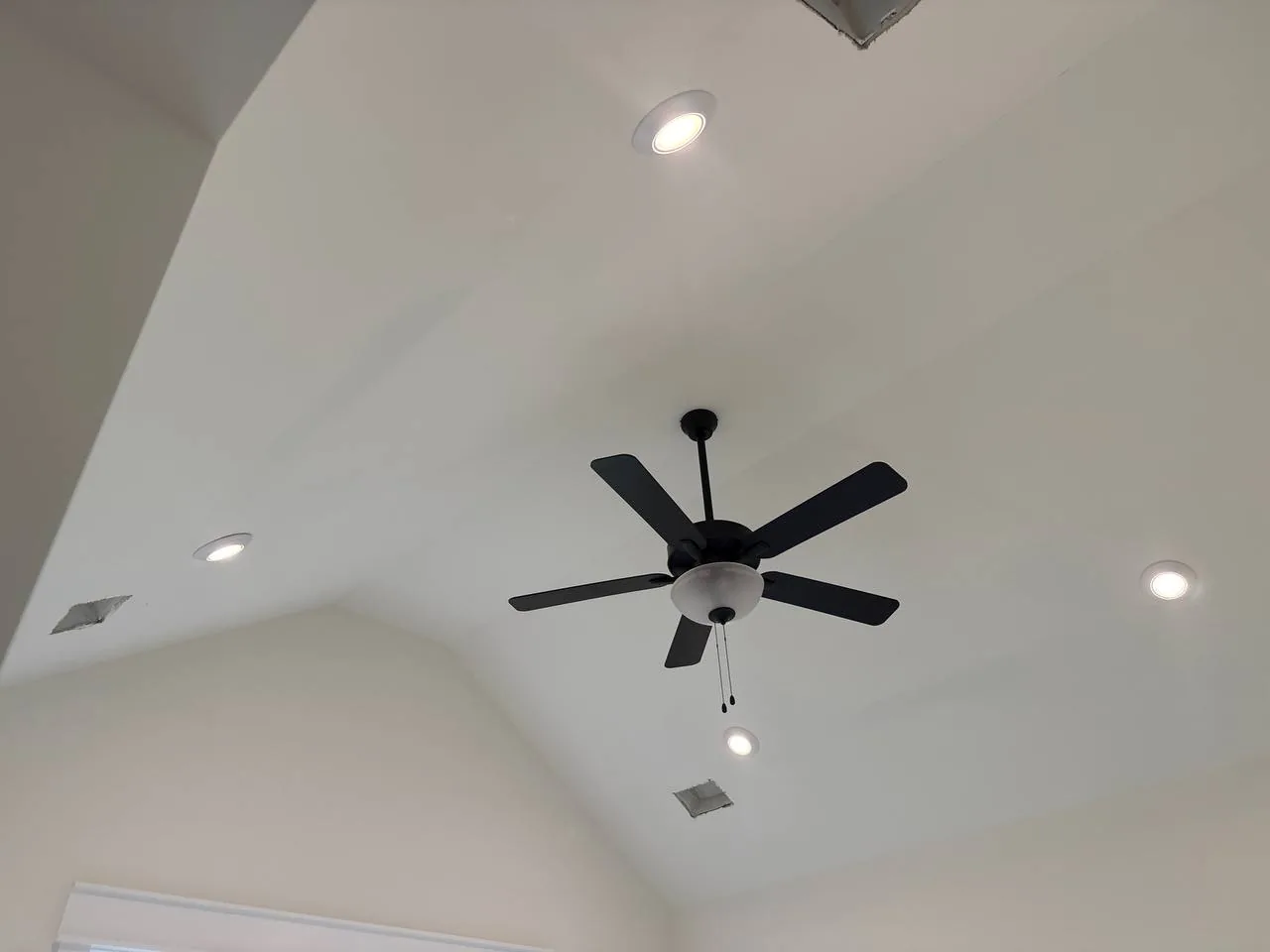
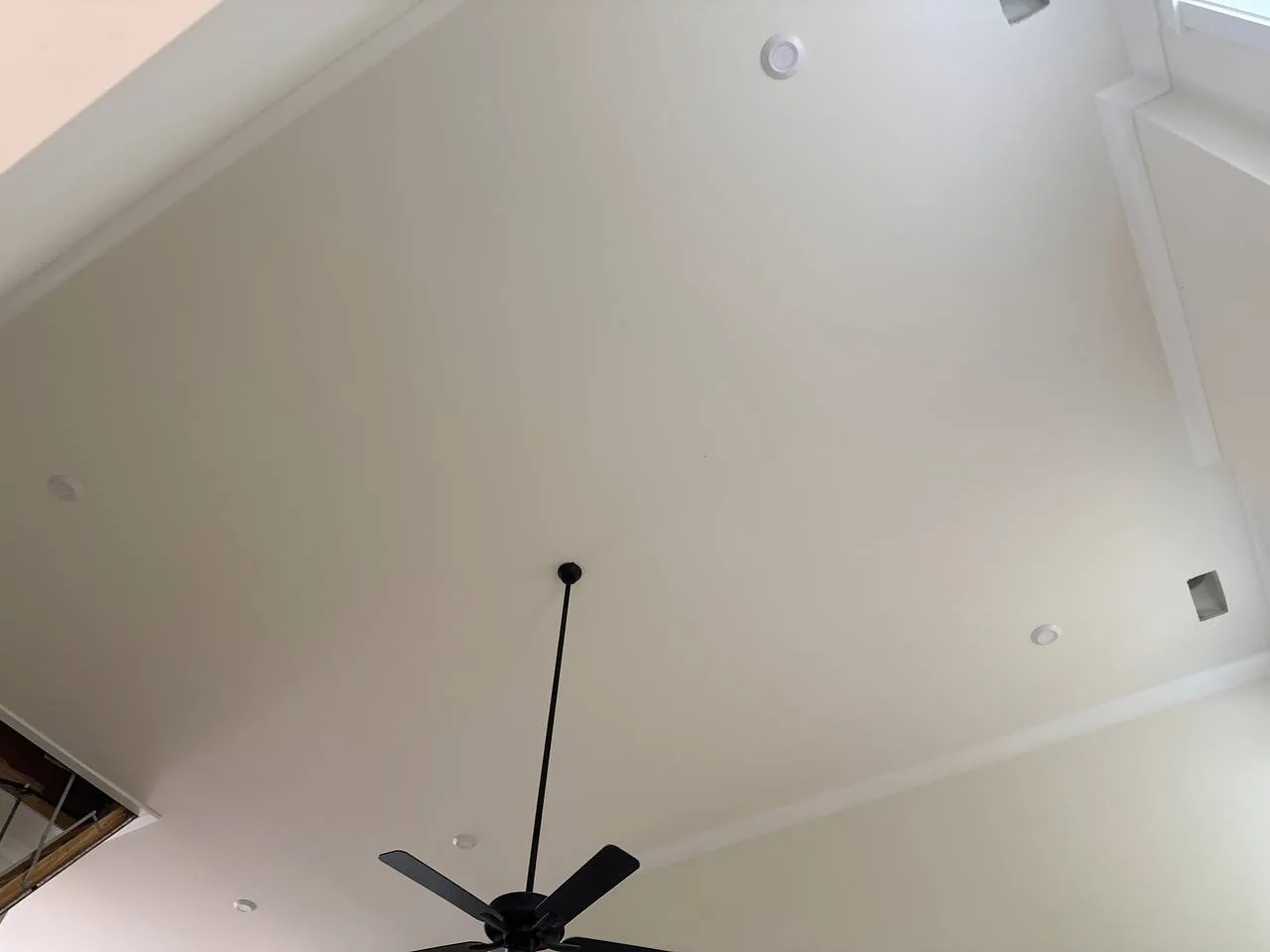
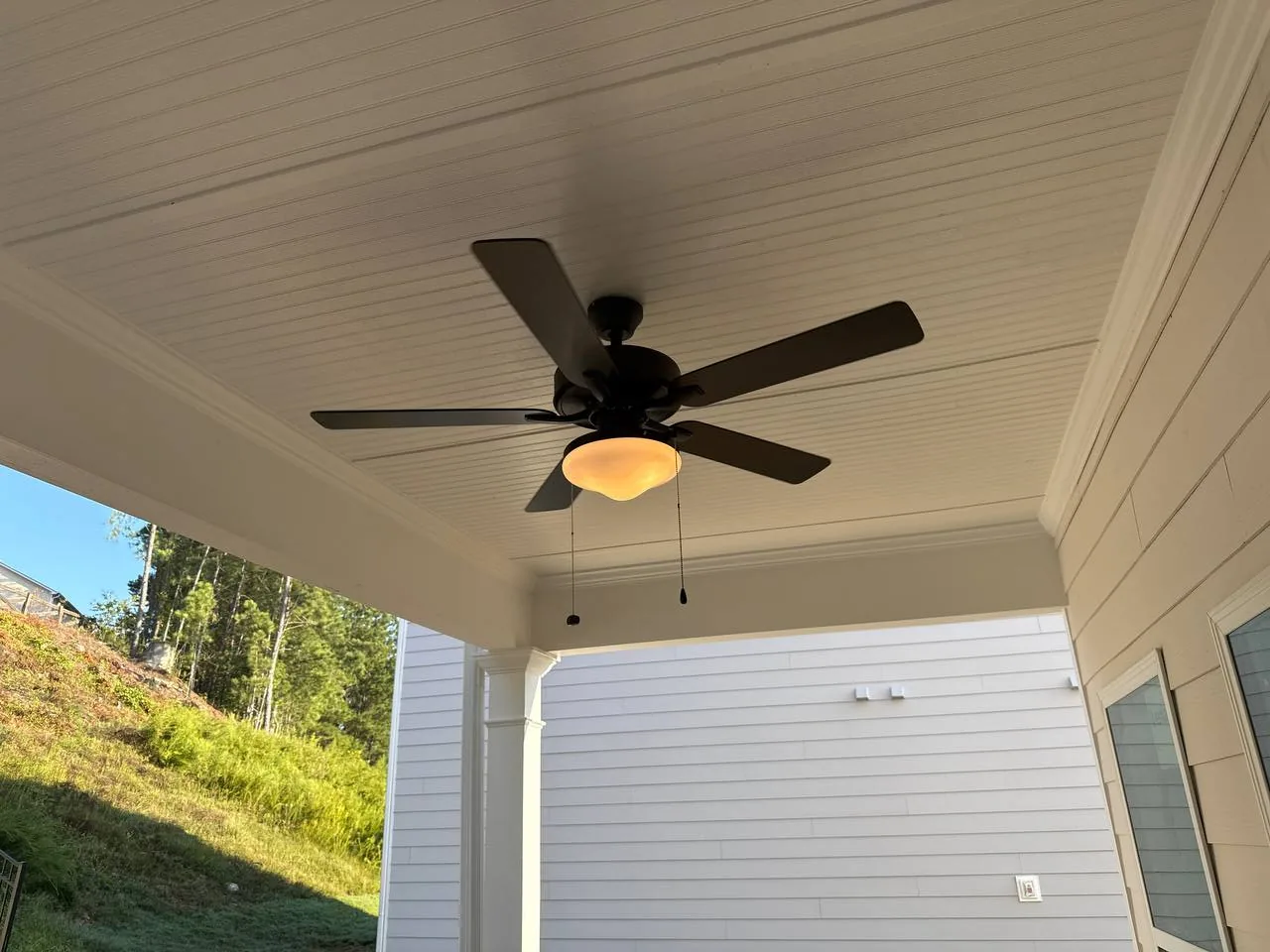
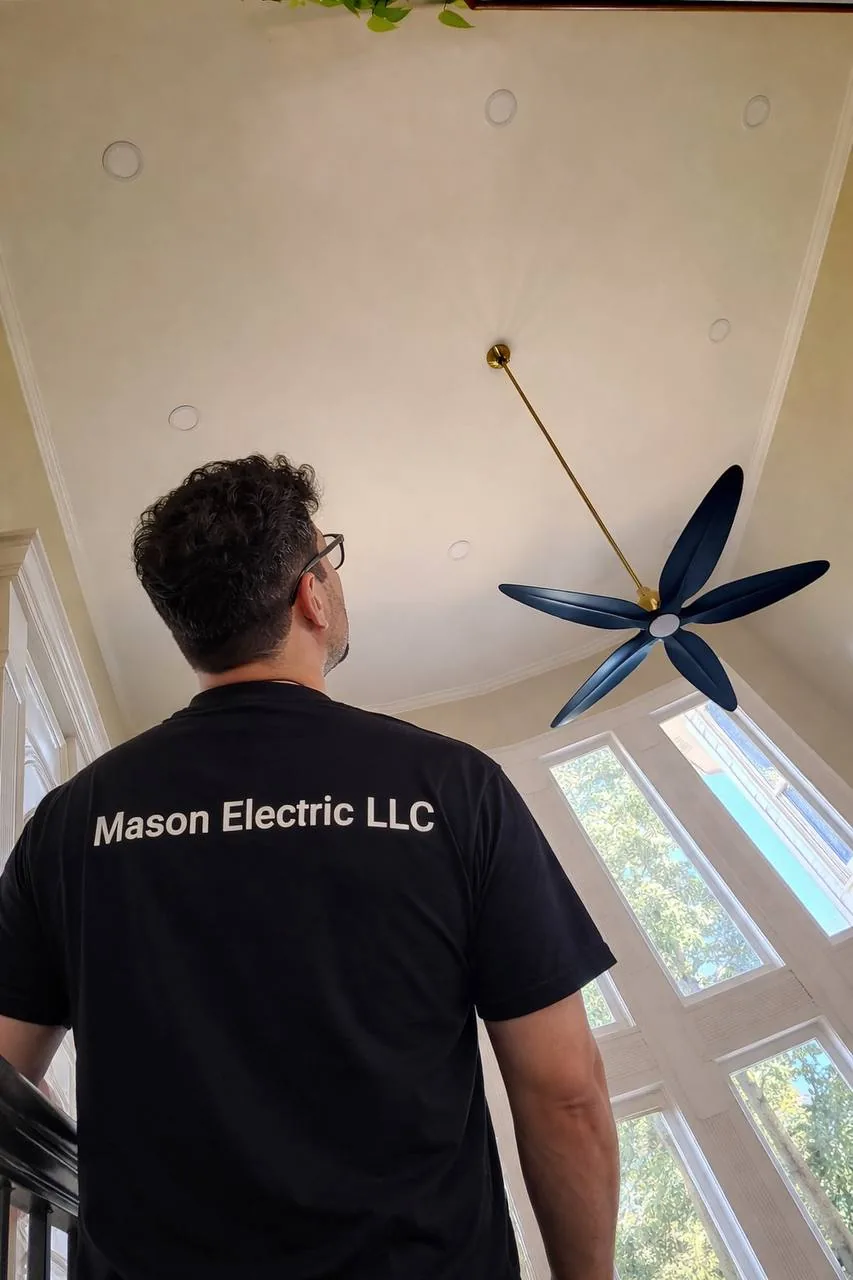
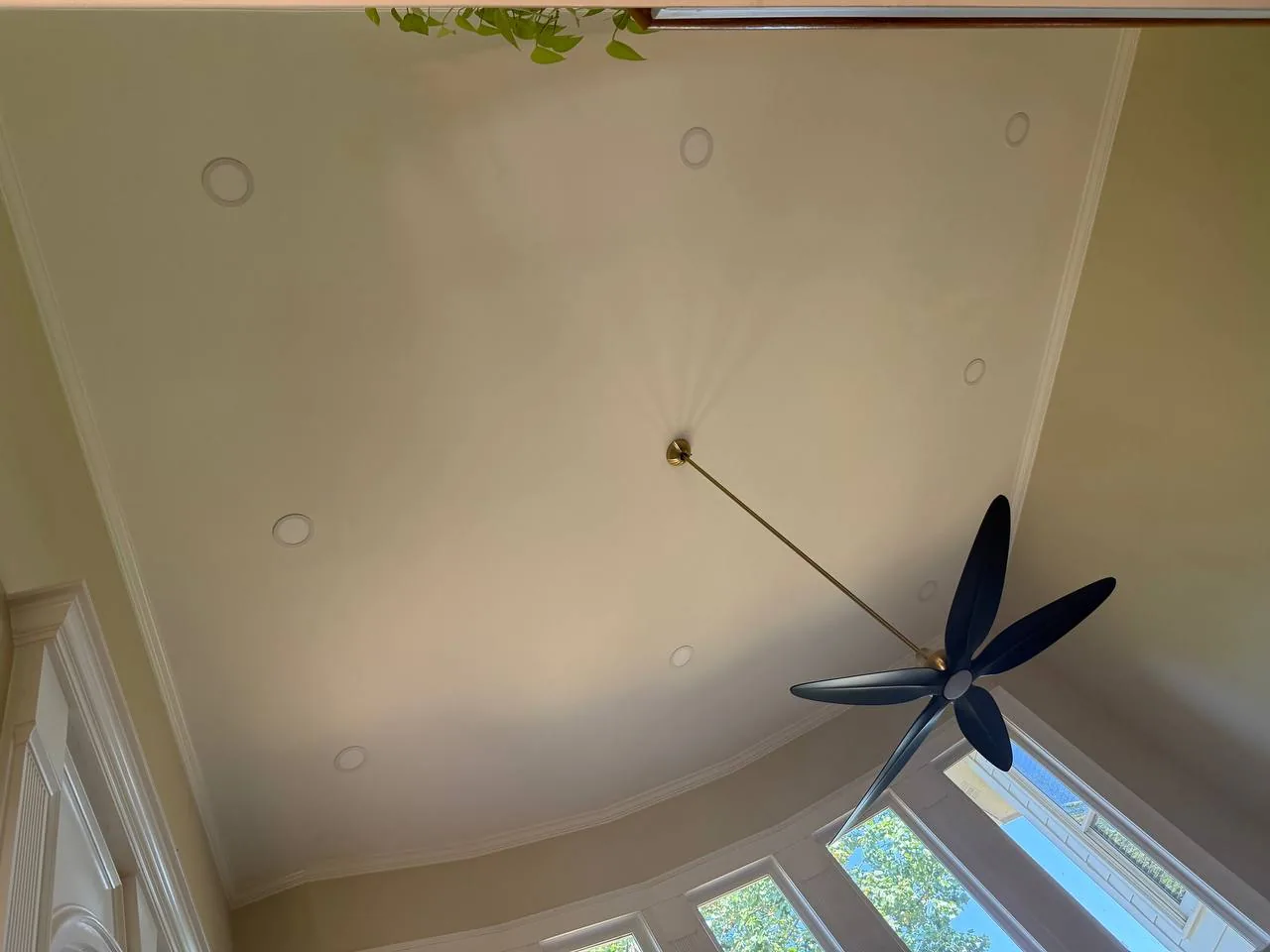
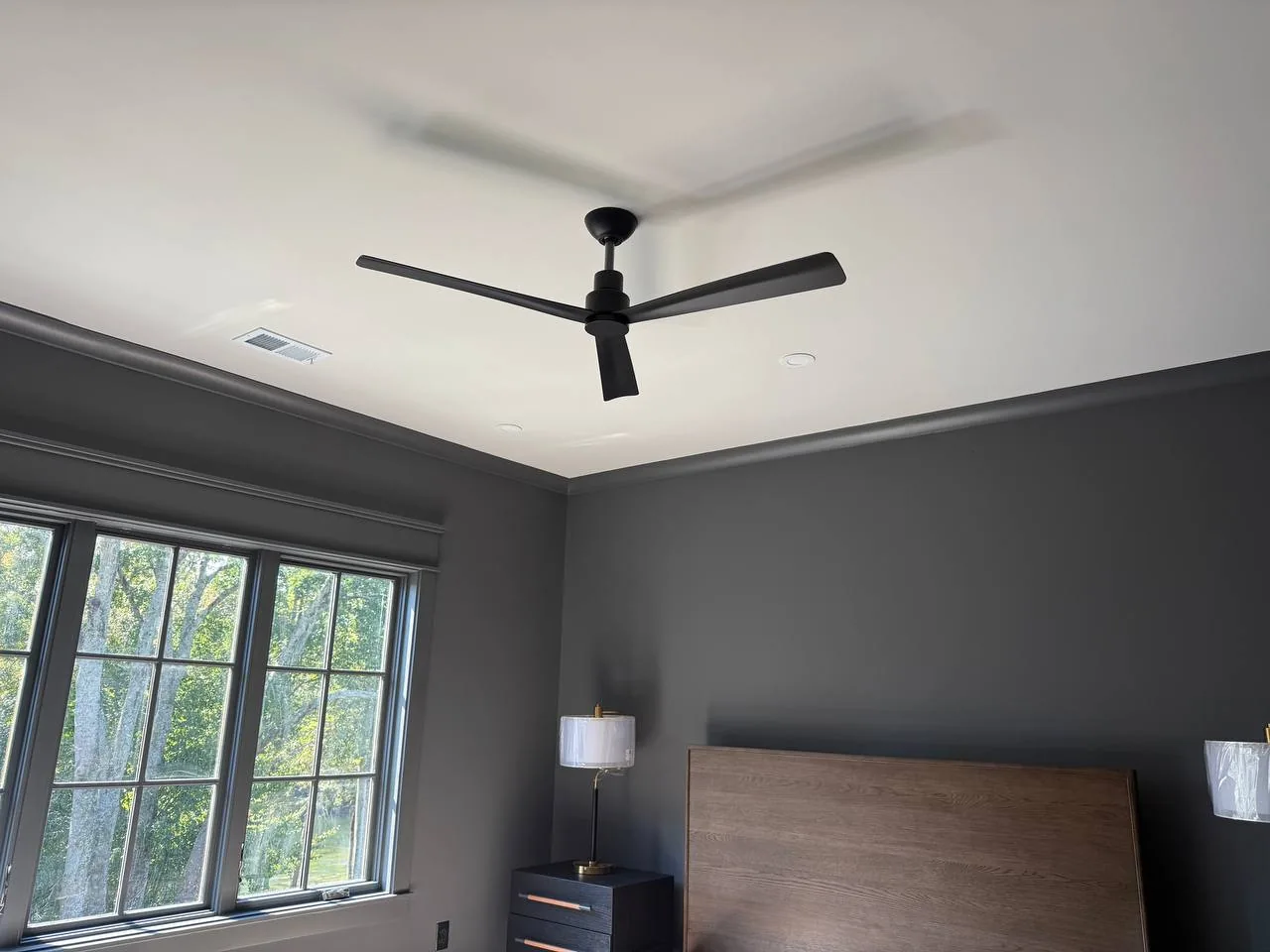
Start with the ceiling you have.
Low ceiling
A suitable low-profile fan may preserve clearance. Check the model’s mounting and clearance instructions against the room before choosing the blade size.
High or sloped ceiling
Downrod length, mounting angle, adapter compatibility, and installation access need planning together. A decorative extension is not automatically approved for every fan.
Porch or outdoor room
Choose a fan with the appropriate environmental rating for the exposure. A covered roof alone does not make an indoor-only fan suitable.
Your old light box deserves a second look.
Fan-rated support
A ceiling light and a rotating fan place different demands on their support. The electrician checks the existing box, secure support, mounting arrangement, and selected fan before reusing the location.
Mounting compatibility
Hunter’s fan-rated box guidance explains support considerations. Follow the actual fan’s instructions: heavy models and sloped ceilings may need a different mounting arrangement.
New wiring route
If there is no wiring at the desired position, plan the cable route and control location. Attic access, joists, finished walls, and the distance from the available supply affect the scope of the addition.

Match the mount before you match the finish.
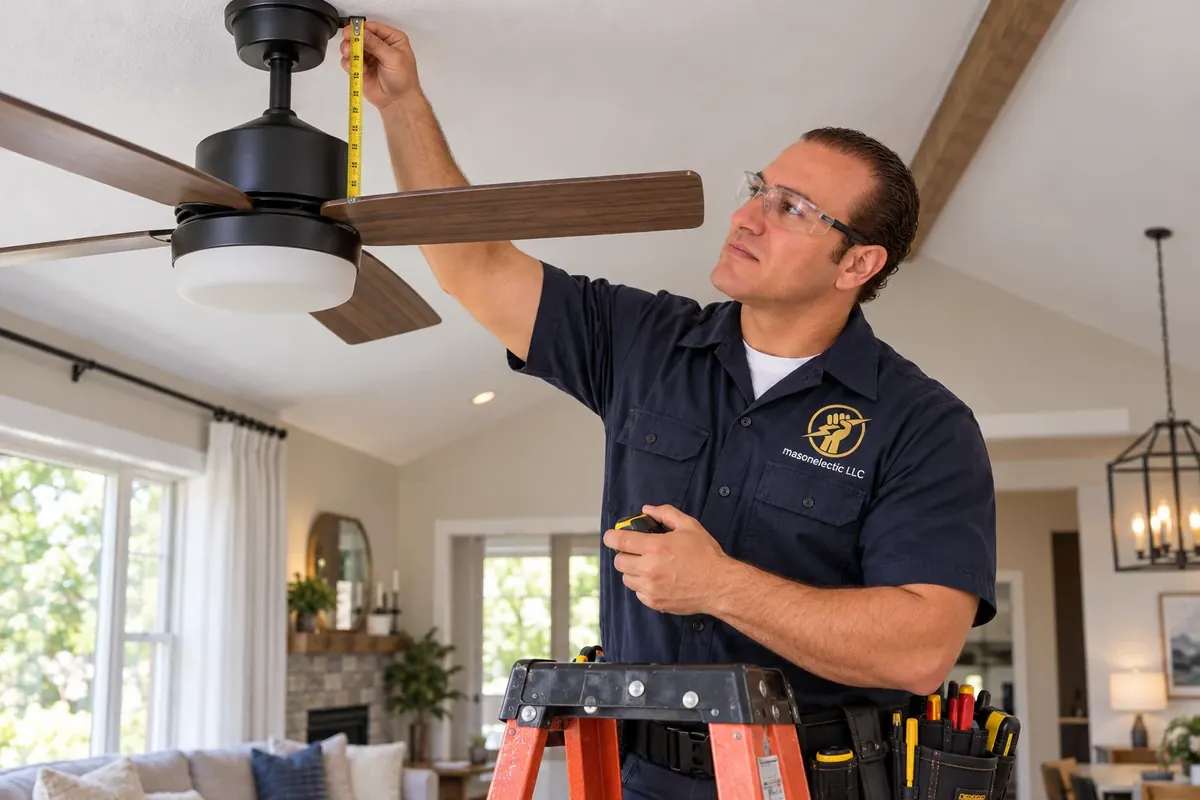
The fan’s listed weight, canopy, bracket, downrod, and angle limits should work as a system. Measure ceiling height and note furniture, doors, and nearby obstacles. A product photo does not show whether the installation will meet its required clearances in your room.
For a tall foyer or vaulted room, include a wide photo showing access from the floor. Access equipment can be a larger part of the job than assembling the fan itself. Discuss the intended position before relocating an existing light point.

Ready to plan your ceiling fan installation?
Share the room height, existing fixture, and fan model. If the fan is for a bathroom, see bathroom exhaust fan installation instead.
How do you want to run the fan and light?
| Control preference | What it changes |
|---|---|
| Separate wall switches | Existing conductors and switch wiring determine whether independent fan and light control is practical. |
| Remote control | Receiver compatibility, canopy space, and pairing follow the model instructions. Decide where the remote will live. |
| Smart control | Check the specific fan, controller, and app compatibility. Do not assume a standard light dimmer can control the motor. |
| Existing switch retained | The fan may still rely on its supplied remote or control system. Confirm the desired daily operation before installation. |

A new fan should be checked in the room where it runs.
Assembly and operation
Secure the canopy and blades, then check available speeds, lighting, and controls. Review vibration and unwanted noise: mounting, blade balance, or the product itself may be involved.
Parts and existing symptoms
Have the model instructions and all supplied parts ready. Mention whether the old fan wobbles, hums, has a failed light, or only runs at one speed to help clarify the replacement scope.
Wall controls
Changing the wall controls too? Review outlet and switch installation for related electrical-device work, and discuss the controls you want to use with the selected fan.
What changes the installation estimate?
An existing supported fan location is a different job from a light-to-fan conversion or a new ceiling point. Ceiling height, access, support upgrades, cable routing, control changes, assembly complexity, and removal of the old fixture all affect the scope.
Use Georgia’s current code framework and confirm any permit or inspection requirements for the work at the actual address. No single permit assumption covers a simple replacement and a new wiring route.
For product comparisons, ENERGY STAR’s ceiling-fan resource can help you evaluate certified models. Product efficiency does not replace a support or clearance check.
Questions about your fan location.
Can a ceiling fan replace an existing light?
Often, but the support and wiring must be evaluated. A light fixture’s box is not automatically suitable for a fan.
Do I need a downrod for a sloped ceiling?
That depends on the selected fan and ceiling angle. Check the manufacturer’s mount, adapter, and downrod requirements before ordering accessories.
Can I keep separate switches for the fan and light?
It depends on the existing wiring and the fan’s control design. Some models use an integrated receiver and need their specified controls.
Why does my new fan wobble?
Blade assembly, mounting, balance, and product defects can all contribute. Request an assessment if operation is visibly unstable rather than continuing to run it.
Should I buy the fan before requesting an estimate?
You can send a model link before buying. Include ceiling height, room photos, and whether a fan or light already occupies the location.
Electrical service across Atlanta Metro
Mason Electric serves Atlanta, Alpharetta, Milton, Roswell, Duluth, Cumming, and Johns Creek. Include your address and ZIP code to confirm scheduling and the authority responsible for the property. City or county jurisdiction and the actual work determine the approval process. Serving Alpharetta? See our Electrician in Alpharetta page.
For properties within Atlanta, use the City of Atlanta’s Office of Buildings information to reach the relevant permitting department. Confirm the project-specific permit and inspection steps before work is scheduled.
Send the room and the fan model.
A photo of the ceiling, your preferred model, and the control setup give us a useful starting point for your estimate.