Electrical Panel Replacement or Upgrade
Electrical Panel Upgrade or Replacement: Start With the Right Scope
A panel project should solve the problem your property actually has. A tripping breaker may call for a focused repair, while water damage, an aging breaker box, limited capacity, or planned electrical loads may require a broader solution.
Mason Electric evaluates the panel, available electrical capacity, service equipment, and what you plan to power before recommending a breaker repair, electrical panel replacement, subpanel addition, or electrical service upgrade.
- Panel condition review
- Capacity assessment
- Clear project scope
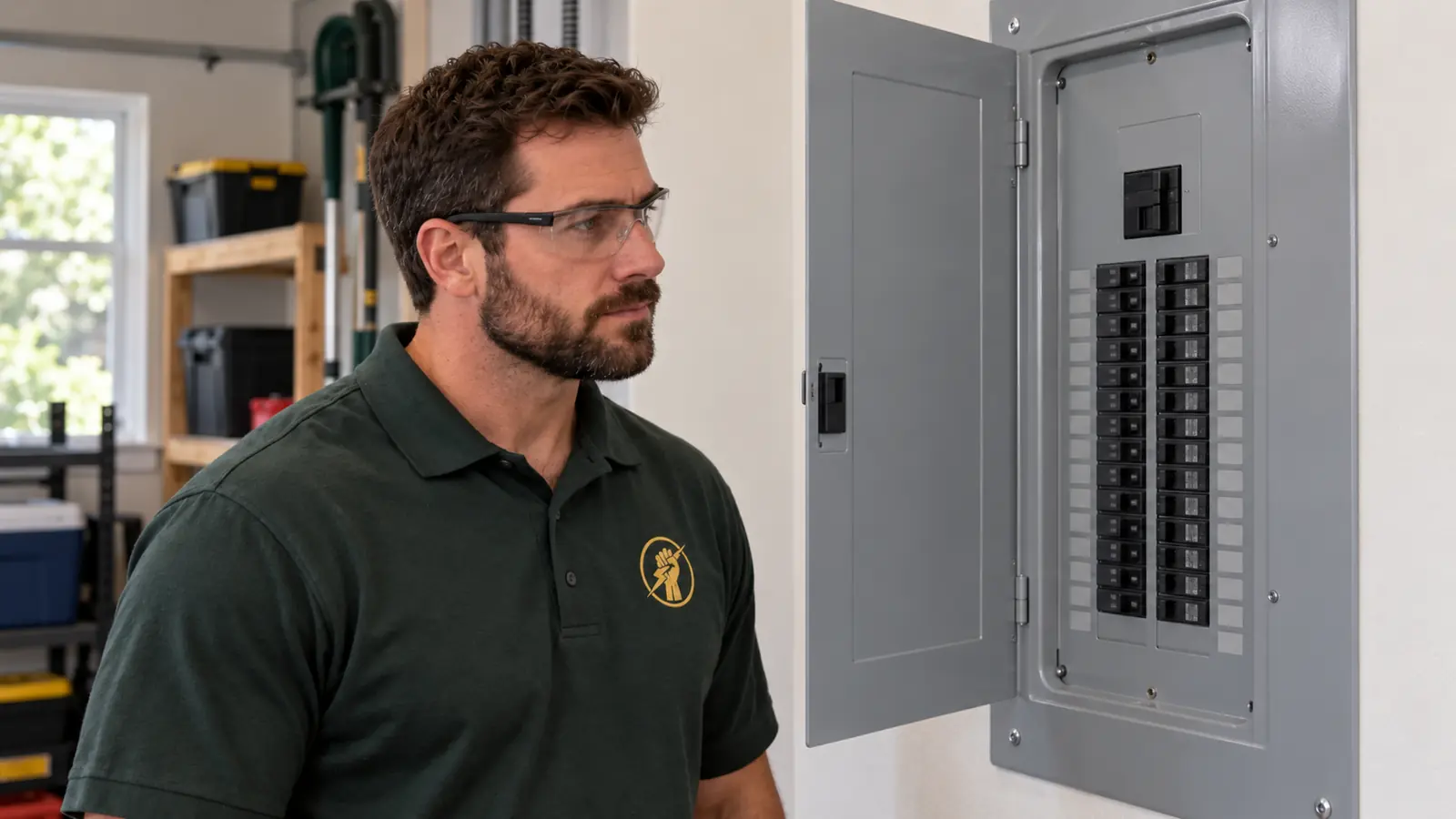
Common electrical panel project scopes
Breaker or Circuit Repair
An isolated trip or faulty component does not automatically mean the entire panel must be replaced. Diagnosis comes first.
Explore circuit breaker replacementPanel Replacement
The breaker box or load center may need replacement because of condition, compatibility, corrosion, limited space, or practical system needs.
Compare the project scopesElectrical Service Upgrade
A broader project may extend to the meter socket, service entrance, main disconnect, grounding, inspection, and utility coordination.
See what may be involvedSigns Your Electrical Panel Needs a Closer Look
Not every electrical issue leads to a full panel replacement. These conditions are reasons to have the panel and related circuits assessed so the recommendation matches the actual problem.
- Frequent breaker trips during normal use
- Flickering lights or noticeable power fluctuations
- Crackling or buzzing from the electrical panel
- No room in the electrical panel for a new breaker
- Water damage or corrosion in or around the panel
- A fuse panel or older equipment with compatibility concerns
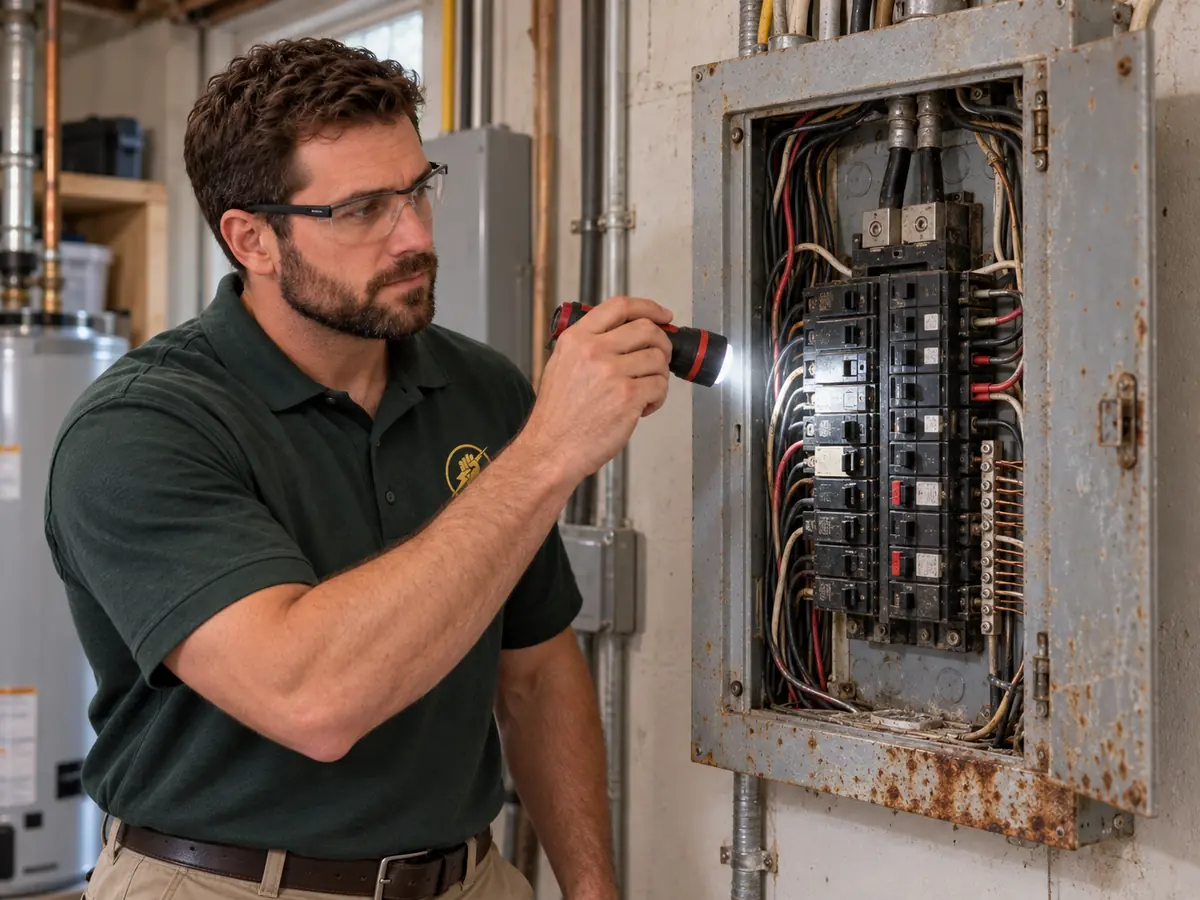
Panel Repair, Panel Replacement, or Electrical Service Upgrade?
Homeowners often use these terms interchangeably, but they can describe very different projects. A clear estimate should identify which scope is being proposed.
| Decision point | Breaker or panel repair | Electrical panel replacement | Electrical service upgrade |
|---|---|---|---|
| Typical starting point | An isolated breaker, circuit, labeling, or troubleshooting concern. | The existing breaker box or load center has condition, space, equipment, or compatibility limitations. | The property’s available service capacity or service equipment is part of the project. |
| May include | Single breaker swaps, testing, or focused circuit work. | A new panel, compatible breakers, circuit organization, and circuit labeling. | Panel work plus some combination of meter equipment, service entrance conductors, main disconnect, grounding, and bonding. |
| Capacity impact | Usually addresses a specific issue without increasing service capacity. | May modernize the panel while keeping the existing service capacity. | May change the capacity available to the property when the complete service is designed for it. |
| Coordination | Depends on the repair and local requirements. | Permit and inspection steps depend on the property address and scope. | May also require utility disconnect/reconnect and metering coordination. |
Do You Need a 100-Amp-to-200-Amp Panel Upgrade?
There is no single service size that fits every home or light-commercial property. The useful question is whether the existing electrical service can support current demand and the equipment you plan to add.
A load calculation can help evaluate the existing service, planned circuits, and future loads before a 200-amp panel upgrade or full electrical service upgrade is recommended.
- EV charger and dedicated circuit plans
- Generator and transfer switch installation
- HVAC upgrades or tankless water heater equipment
- Hot tubs and pool equipment
- Solar installation planning
- Home addition or remodel loads

What Is Already Running?
Heating and cooling equipment, cooking appliances, water heating, existing circuits, and simultaneous use all affect the capacity discussion.
What Are You Adding?
An EV charger, generator, remodel, pool equipment, solar project, or new appliance can change the practical requirements. For a shop or office adding chargers, this checklist of what to settle before commercial charger installation shows what to prepare for a capacity review.
What Solves the Need?
The answer may be a dedicated circuit, subpanel addition, load-management approach, panel upgrade, or full service upgrade.
What We Review During a Panel Assessment
A useful assessment looks beyond the label on the breaker box. It connects the condition of the existing equipment with the problem you are experiencing and the electrical loads you intend to add.
Panel Condition
The breaker box, load center, or fuse panel is reviewed for visible wear, water damage, corrosion, available space, and equipment compatibility.
Breaker and Circuit Concerns
Frequent trips, flickering lights, buzzing, crackling, breaker replacement needs, and circuit labeling help narrow the diagnosis.
Current and Future Load
The existing service rating, present electrical demand, planned equipment, and need for a load calculation are considered together.
Panel or Full Service
The assessment identifies whether the project is panel-only or may involve the meter socket, service entrance, main disconnect, grounding, or bonding.
Subpanel Options
A subpanel addition may provide circuit space in some projects, but it does not increase the electrical service capacity by itself.
Project Coordination
The property address and final scope determine which permitting, inspection, and utility-related steps may apply.
Panel Replacement and Electrical Service Upgrade Are Not the Same Project
An electrical panel replacement focuses on the breaker box or load center. The property may receive a modern panel while keeping the same electrical service capacity.
A full electrical service upgrade can extend beyond the panel. Depending on the existing installation and proposed scope, it may involve the meter base or meter socket, service entrance cable, service entry wire, mast, weatherhead, main disconnect, grounding and bonding, inspection, and utility coordination.
The written scope should clearly state whether the proposal is panel-only or includes service and metering equipment.
Official planning references
Requirements depend on the address, jurisdiction, utility, and exact scope. These official resources explain two parts of that process:

How the Project Moves From Assessment to Power Restoration
The sequence changes with the project, but the important decisions should be clear before installation begins.
Share the Problem and Goal
Describe the symptoms, the age or type of panel if known, and any planned EV charger, appliance, generator, remodel, or additional circuits.
Evaluate the Existing System
The panel condition, breaker configuration, service rating, planned electrical loads, and related equipment are reviewed.
Define the Correct Scope
The proposal should distinguish breaker repair, panel replacement, panel upgrade, subpanel work, and a full electrical service upgrade.
Plan the Applicable Steps
If permitting, inspection, or utility disconnect and reconnect apply, those steps are considered in the project plan.
Complete the Approved Work
The defined panel or service equipment is installed, with included breaker work, circuit labeling, grounding, and bonding completed as applicable.
Final Checks and Restoration
Testing, applicable inspection steps, and utility reconnection are completed according to the project scope.

What Affects Electrical Panel Upgrade Cost?
The panel name alone does not define the project. A useful estimate separates required work from optional improvements and makes the included scope easy to compare.
Panel-Only or Full Service
Changing the breaker box is a different scope from changing service capacity, metering, service entrance conductors, or the main disconnect.
Existing and Planned Capacity
The current service, proposed amp rating, load calculation, and equipment you plan to add shape the project.
Condition and Compatibility
Corrosion, water damage, older equipment, breaker availability, and compatibility concerns can change what is practical.
Circuits and Subpanels
The number and configuration of circuits, new breaker needs, dedicated circuits, and possible subpanel work affect the scope.
Location and Related Equipment
Panel accessibility, relocation, meter equipment, service entrance components, grounding, bonding, and related wiring can matter.
Permits and Coordination
Local permitting, inspection, and utility requirements depend on the property address and the type of work being completed.
Older Panels, Fuse Panels, and Visible Damage
Homeowners may find labels such as Federal Pacific (FPE), Zinsco, or Bulldog Pushmatic, or they may have a fuse panel rather than a modern circuit breaker panel. The exact equipment is only one part of the decision.
The assessment should also consider condition, compatibility, available replacement equipment, water damage or corrosion, existing capacity, breaker configuration, and the electrical work you plan to add.
If you are unsure what panel you have, include a clear photo of the closed panel, the manufacturer label, and the breaker area when you use the online booking form. Photos can help prepare for the assessment, but they do not replace an on-site review.
What to Share Before the Visit
- A photo of the panel and manufacturer label
- Which breakers trip and when
- Any flickering, buzzing, crackling, or power fluctuations
- Visible corrosion or water exposure
- Equipment or circuits you plan to add
- Whether the project involves a remodel or relocation
Serving Atlanta and North Metro Communities
Mason Electric provides electrical panel assessments, panel replacement, panel upgrade, breaker-related service, and related electrical work for homes and light-commercial properties across the Atlanta metro area.
Permit and inspection processes are tied to the property address and the authority responsible for that location. Instead of treating every metro Atlanta project as identical, the applicable steps can be identified after the address and proposed scope are known.
- Atlanta, GA
- Alpharetta, GA Serving Alpharetta? See our Electrician in Alpharetta page.
- Roswell, GA
- Duluth, GA
- Cumming, GA
- Johns Creek, GA
Request a Panel Assessment
Tell us what you are experiencing and what you plan to power. If possible, attach panel photos to the booking form so the initial conversation starts with useful details.
Electrical Panel Upgrade and Replacement FAQs
These answers clarify the decisions that commonly come up before a homeowner schedules panel work.
How do I know if I need an electrical panel upgrade?
Frequent breaker trips, flickering lights, buzzing or crackling, water damage, corrosion, limited breaker space, older equipment, and planned new loads are reasons to have the system assessed. An upgrade is not the only possible outcome; the issue may be limited to a breaker or circuit, or it may require a broader service upgrade.
Should I upgrade my electrical panel?
An upgrade may be considered when the current equipment no longer supports practical present or planned needs, when a larger project requires a capacity review, or when the panel’s condition or compatibility creates limitations. A load calculation and on-site assessment provide a better answer than choosing a panel size by assumption.
What is the difference between 100-amp and 200-amp service?
The amp rating describes the electrical service capacity available to the property. Whether 100-amp service is sufficient depends on current and planned loads. A 200-amp upgrade may involve more than replacing the panel because the meter equipment, service entrance, main disconnect, grounding, and utility connection may also need evaluation.
Do I need to upgrade to a 200-amp panel to install a Level 2 EV charger?
Not automatically. The answer depends on the existing service capacity, other electrical loads, the selected charging equipment, the dedicated circuit, and whether a load-management option is appropriate. The panel and service should be assessed before deciding on an upgrade.
Can a 100-amp panel be upgraded to 200 amps?
A 100-amp-to-200-amp upgrade may be possible, but the scope depends on the existing service equipment and utility connection. The panel, service entrance conductors, meter socket, main disconnect, grounding and bonding, permits, inspection, and utility coordination may all need to be considered.
Do I need a permit to replace an electrical panel?
Permit and inspection requirements depend on the project scope and the jurisdiction responsible for the property. The process may also differ when the work changes the service or meter equipment. The applicable requirements should be confirmed using the property address and final scope.
How long does an electrical panel replacement take?
The schedule depends on whether the project is panel-only or includes a service upgrade, meter work, permitting, inspection, or utility coordination. After the assessment, the expected sequence and anticipated power interruption can be explained for the specific project.
Will my power be off during the entire panel upgrade?
A planned power interruption is generally part of panel replacement work, but the timing depends on the scope and any utility coordination. The expected outage window should be discussed before the project is scheduled.
What affects electrical panel upgrade cost?
Important factors include existing and proposed capacity, panel condition and location, breaker configuration, subpanel work, meter and service entrance equipment, grounding and bonding, related wiring, equipment selection, planned loads, permitting, inspection, and utility coordination. An assessment separates required work from optional improvements.
Does frequent breaker tripping mean the whole panel must be replaced?
No. Frequent trips can be related to a circuit, breaker, connected load, or a broader panel issue. Diagnosis is needed before deciding between circuit breaker repair, panel replacement, or an upgrade.
What if my home has a Federal Pacific, Zinsco, Bulldog Pushmatic, or fuse panel?
The exact equipment and its condition should be identified during the assessment. Panel type is one part of the decision, along with breaker compatibility, corrosion or damage, existing service capacity, and the electrical work you plan to add.
Can a subpanel be added instead of replacing the main panel?
A subpanel addition may provide circuit space in some projects, but it does not increase the electrical service capacity by itself. The available capacity, load calculation, existing panel, and purpose of the added circuits should be reviewed first.
What is the difference between an electrical panel replacement and an electrical service upgrade?
A panel replacement focuses on the breaker box or load center. A service upgrade may also affect the meter base, meter socket, service entrance cable, main disconnect, grounding and bonding, utility connection, permitting, and inspection. The projects can overlap, but they are not automatically the same.
Find Out Whether You Need a Breaker Repair, Panel Replacement, or Service Upgrade
Tell Mason Electric what you are experiencing and what you plan to add. We can evaluate the existing system and explain the scope before the work is scheduled.