How to Tell if a GFCI Outlet Is Bad
A dead bathroom outlet or a GFCI that will not reset does not always mean the outlet is broken. Often it tripped for a reason, or another GFCI upstream cut the power. But GFCI outlets do wear out, and a bad one can stop protecting you from shock without any warning. Here is how to tell if a GFCI outlet is bad, or if it simply tripped.
Key takeaway
A GFCI outlet is likely bad if it does not trip when you press TEST, will not reset, trips with nothing plugged in, or feels warm or smells burnt. Test it with a lamp plugged in, and check for another tripped GFCI first.
Do GFCI Outlets Go Bad?
Yes, GFCI outlets go bad, and so do the older GFI outlets in many homes. A GFCI (ground fault circuit interrupter, often just called a GFI) watches the current going out and coming back on a circuit. If some of it leaks away, for example through water or a person, it cuts the power in a fraction of a second. The parts that do this wear out with age, and they wear out faster in damp places like bathrooms, garages and outdoors.
Many GFCI outlets last around 10 years, but there is no fixed date. Newer GFCI outlets check themselves and may show a warning light or refuse to reset when they fail. Older ones can fail without any sign, which is why a monthly test matters.
7 Signs of a Bad GFCI Outlet
It does not trip when you press TEST
With a lamp plugged in, TEST should cut the power. If the lamp stays on, the outlet is not protecting you.
It will not reset
RESET will not stay in, even though the breaker is on and nothing is plugged in.
Warm, scorched or smells burnt
Heat or burn marks point to a loose connection or a failing device. Stop using it and call an electrician.
It trips with nothing plugged in
A GFCI that trips on an empty circuit may be worn out, or the wiring may have a fault.
It trips after rain
Water in an outdoor box can trip a good GFCI. A cover that keeps water out often fixes it.
The indicator light shows a fault
Many newer GFCIs show a red or blinking light when they fail their self-test.
Cracks or a loose face
A cracked cover, loose buttons or a wobbly outlet are reasons to replace it.
Tripped GFCI or Bad GFCI?
Before you replace anything, rule out a simple trip. Press RESET firmly until it clicks. If the power comes back and stays on, the GFCI did its job.
| What you notice | Tripped GFCI | Bad GFCI |
|---|---|---|
| RESET | Clicks in and power returns | Will not stay in, or power does not return |
| TEST button | Cuts the power | Does nothing |
| With nothing plugged in | Stays on | Trips again on its own |
| Heat or smell | None | Warm, burnt smell or marks |
| Likely cause | Water, a damaged cord or a leaking appliance | Worn parts, moisture damage or wiring fault |
How to Test a GFCI Outlet Safely
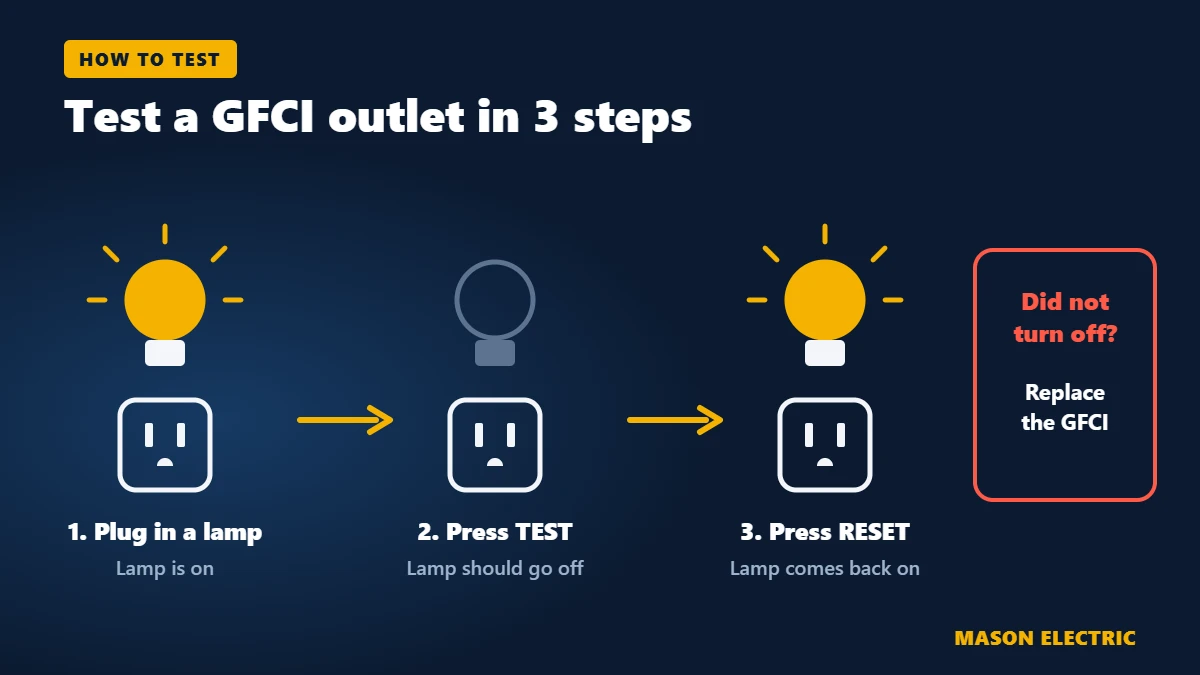
You can test a GFCI without opening anything. Keep your hands dry and do not test an outlet that is wet, cracked or warm.
- 1
Plug in a lamp and turn it on.
- 2
Press TEST. The lamp should go off right away.
- 3
Press RESET. The lamp should come back on.
- 4
If the lamp did not go off, or will not come back on, check the breaker for that area.
- 5
If the breaker is on and the outlet still fails, stop using it and have it replaced.
A plug-in GFCI tester from a hardware store does the same job and also shows some wiring problems.
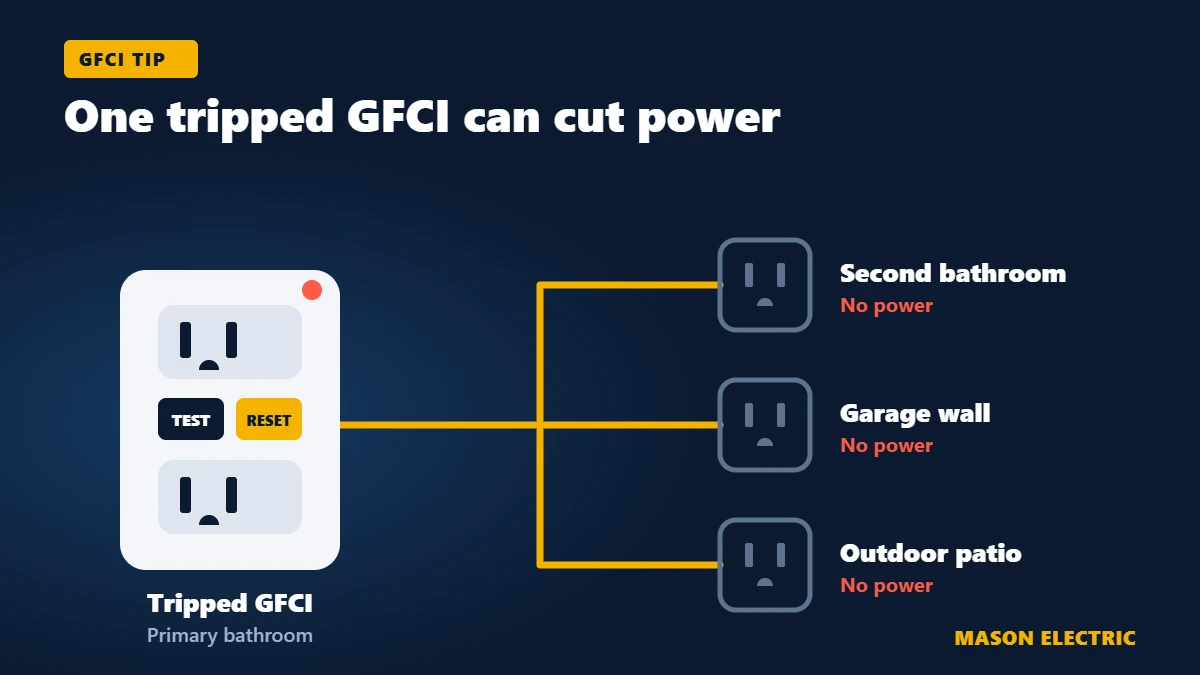
Dead outlet but no tripped GFCI? One GFCI can protect several outlets after it. A dead bathroom outlet may be controlled by a GFCI in another bathroom. A dead patio outlet may be controlled by one in the garage. Check every GFCI nearby before you assume the outlet is bad.
Why GFCI Outlets Go Bad
- Age. The sensing and trip parts wear out over the years.
- Moisture. Outdoor, garage and bathroom outlets see damp air and water that corrode the contacts.
- Power surges. Lightning and utility surges can damage the electronics inside.
- Frequent tripping. Each trip puts wear on the mechanism.
- Wrong wiring. A GFCI with line and load reversed may look fine but not protect the other outlets.
When a GFCI Keeps Tripping but Is Not Bad
A GFCI that trips often is not always faulty. These are common causes in North Atlanta homes:
- Rain getting into an outdoor box without an in-use cover
- Old extension cords or tools with damaged insulation
- Appliances like freezers, sump pumps or pressure washers that leak a little current
- Too many outlets wired after one GFCI, which adds up small leakage
If unplugging everything stops the trips, the problem is one of the devices, not the outlet. If it trips with nothing plugged in, the outlet or the wiring needs a closer look, often as part of electrical troubleshooting.
Where GFCI Protection Is Required
GFCI protection is required in areas where water and electricity can meet. In a typical home that includes:
Older homes may not have GFCI protection in all of these places. Georgia uses the 2023 NEC with state amendments, and the rules that apply depend on your city and when the work is done.
GFCI Outlet FAQs
Do GFCI outlets go bad?+
Yes. The test circuit and the internal parts wear out over time, and moisture, heat and power surges can damage them sooner. A GFCI that will not trip when you press TEST, or will not reset, should be replaced.
How do you know if a GFCI outlet is bad?+
Press TEST with a lamp plugged in. The power should cut off and RESET should bring it back. If it does not trip, will not reset, trips with nothing plugged in, or the indicator light shows a fault, the outlet is likely bad.
How long does a GFCI outlet last?+
Many last around 10 years, but outdoor, garage and bathroom outlets often wear out faster because of moisture. Testing once a month is the easiest way to catch a failing one.
Why does my GFCI keep tripping?+
It may be doing its job. Water in an outdoor box, a damaged cord or an appliance that leaks current can trip a good GFCI. If it trips with nothing plugged in, the outlet or the wiring may be the problem.
Why does my GFCI not reset?+
There may be no power reaching it, for example a tripped breaker, or there may still be a ground fault on the circuit. If power is present and nothing is plugged in, the GFCI itself has probably failed.
Can one bad GFCI cut power to other outlets?+
Yes. One GFCI can protect other outlets wired after it. If a bathroom or garage outlet is dead, look for a tripped GFCI in another bathroom, the garage or outside before you assume an outlet is bad.
Where are GFCI outlets required?+
In homes, GFCI protection is required in places like bathrooms, kitchen countertops, garages, outdoors, unfinished basements, crawl spaces and laundry areas. Requirements depend on the code in force where you live.
Can I replace a GFCI outlet myself?+
We do not recommend it. A GFCI has separate line and load terminals, and wiring them backwards can leave the outlet looking normal while it no longer protects you. A licensed electrician can replace it and test the whole circuit.
Need a GFCI outlet replaced?
Mason Electric is a licensed electrician in Atlanta and North Fulton. We replace and test GFCI outlets in Alpharetta, Milton, Johns Creek, Roswell, Duluth and Cumming. See our outlet and switch installation service or call (678) 599-8706.
Mason Electric LLC, 5020 Morton Ferry Cir, Alpharetta, GA 30022 · (678) 599-8706